“My acne is gone, but the pitted scars are still here.”
For many people, the real frustration starts after the breakouts have cleared, when the pitted scars they leave behind refuse to go away.
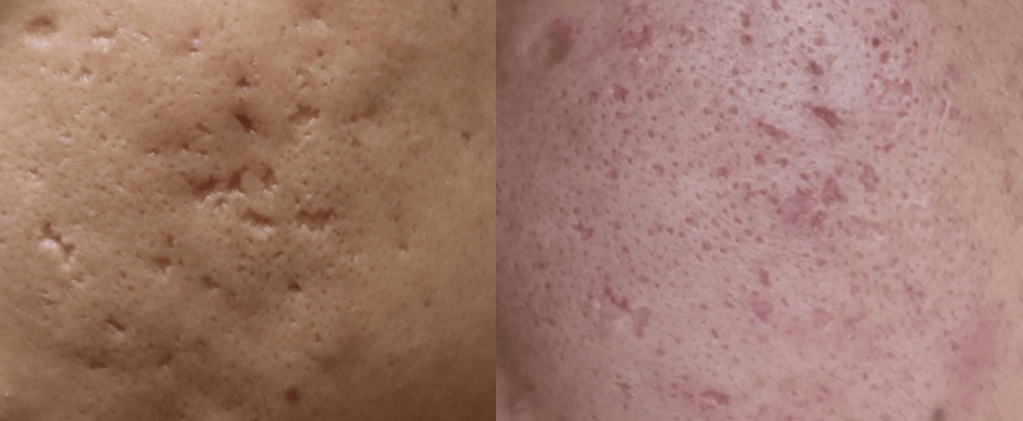
Depressed scars on areas that catch light from the side, like the cheeks or temples, can be especially noticeable. Makeup often makes the uneven texture stand out even more, and they can be a constant worry every time you’re in a photo.
Search for acne scar treatments and you’ll find a long list of options: Fraxel, Potenza, Pico, subcision, Juvelook, fillers…
With so many choices, how do you know which one is right for you?
With so many choices,
how do you know which one is right for you?
Once you understand what actually causes pitted scars, choosing the right treatment becomes much easier.
Why Don’t Pitted Scars Fill In Over Time?
Acne scars fall into two broad categories: raised scars and depressed (atrophic) scars.
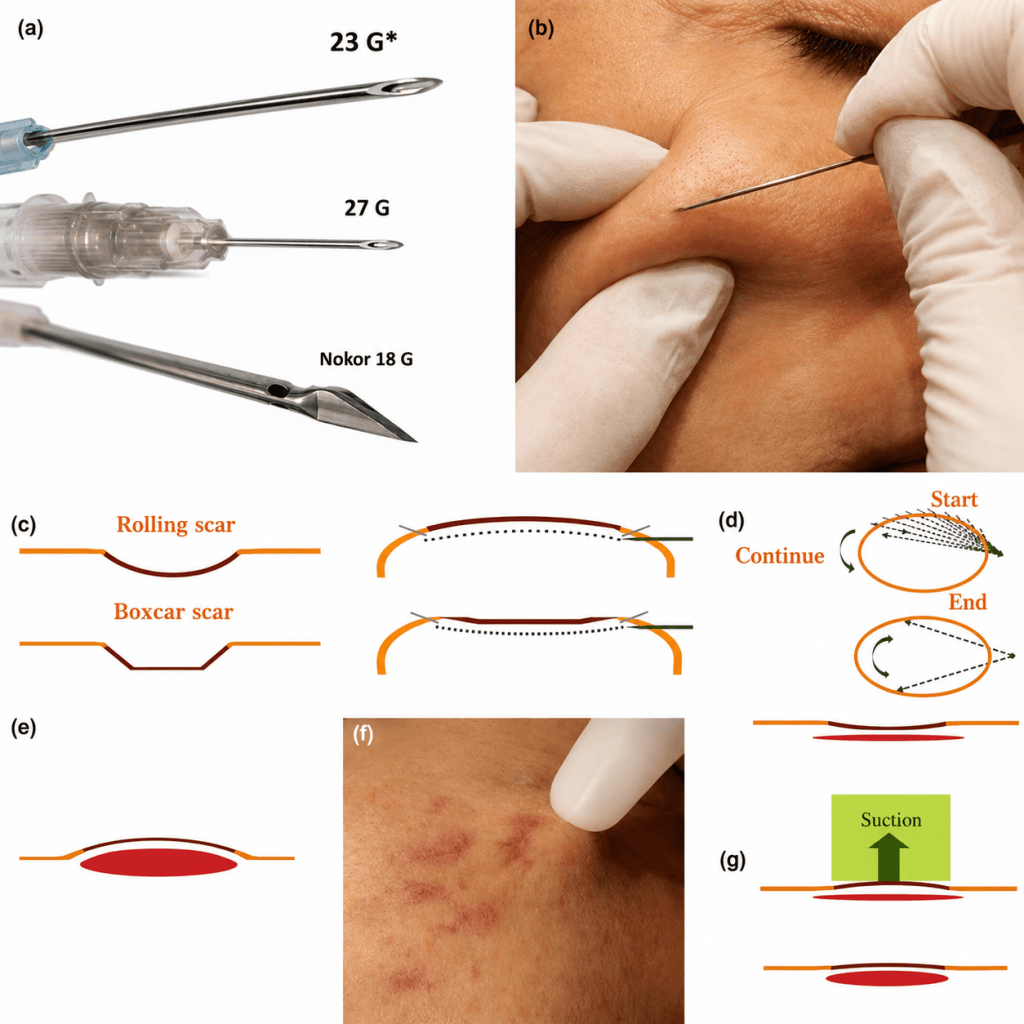
The most common type left on the face is the depressed acne scar, which typically appears in three forms: ice pick, boxcar, and rolling scars.
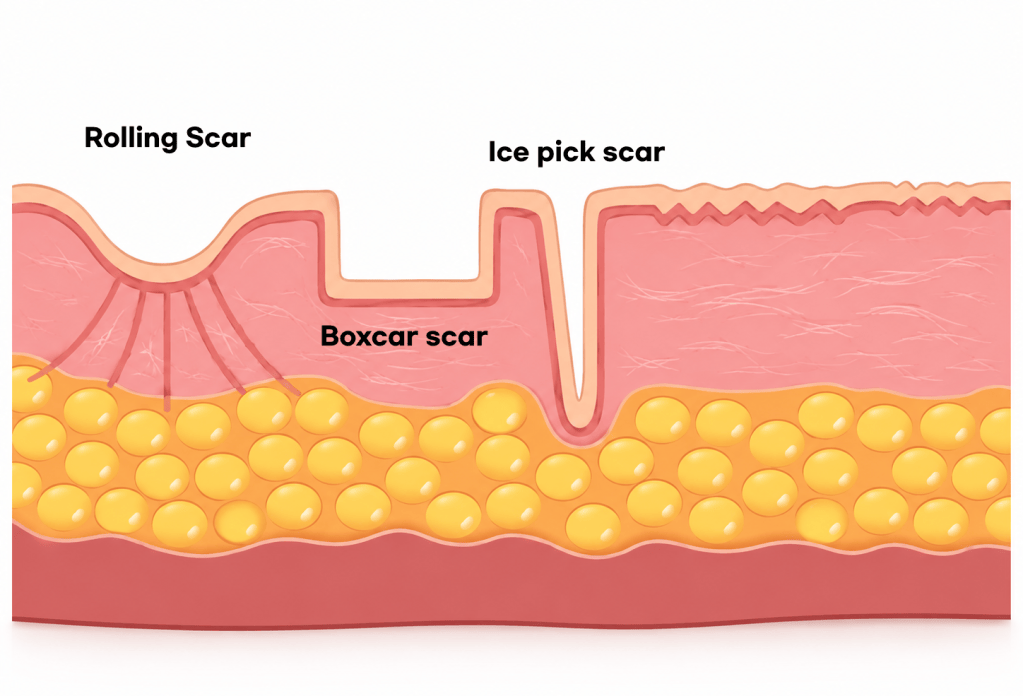
When inflammatory acne runs deep and damages the collagen in the dermis, the skin can’t fully return to its original structure. Instead, firm scar tissue may form beneath the surface.
In some scars, fibrous bands under the skin are actually pulling the base of the scar downward.
Put simply, while your skin is trying to lift itself back up, a tether underneath keeps tugging it down.
That’s why not every pitted scar will fill in naturally, no matter how long you wait.
Will More Laser Sessions Help?
When people think of scar treatment, lasers like Fraxel are often the first thing that comes to mind.
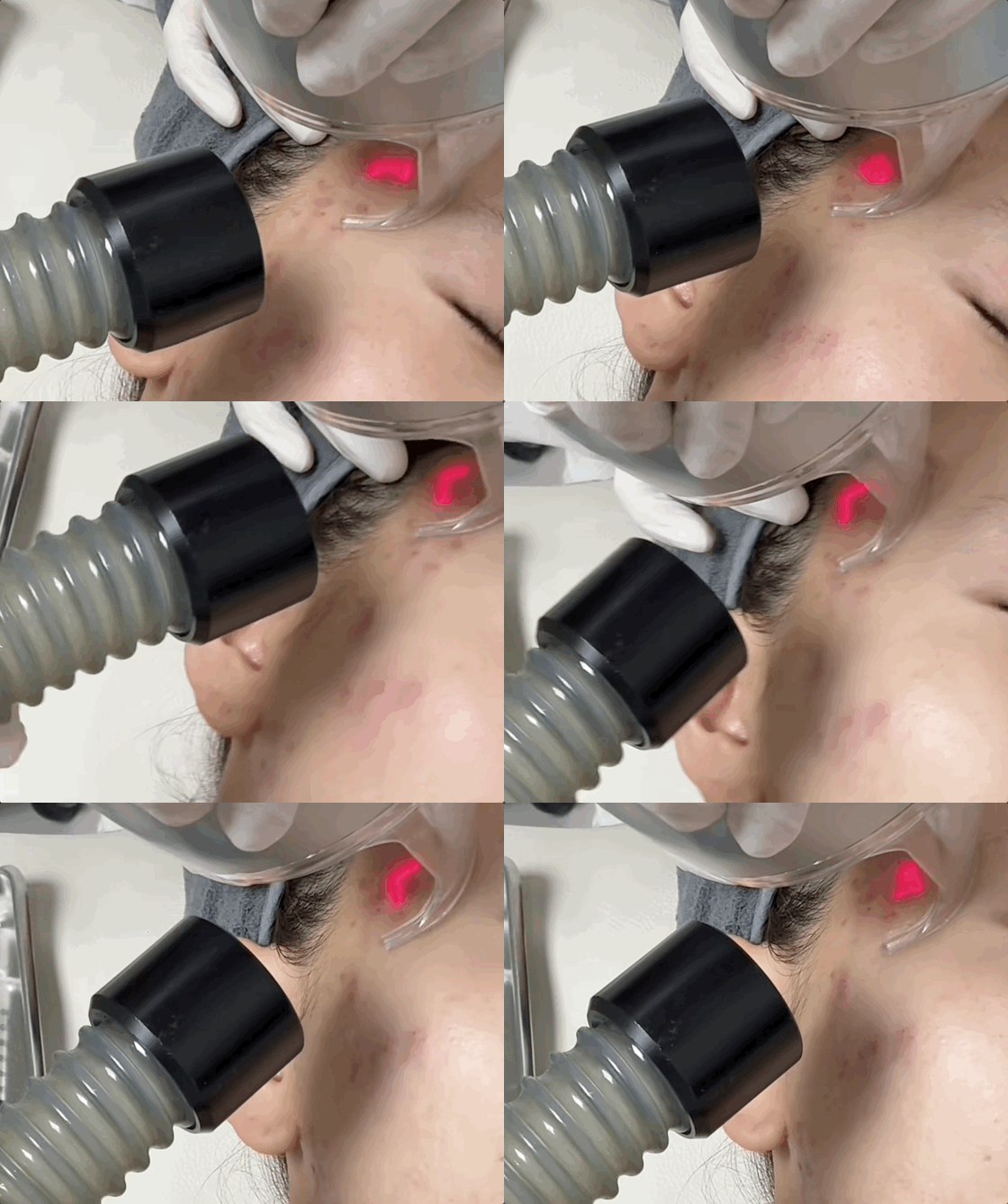
Treatments such as fractional lasers and microneedling RF create controlled micro-injuries in the skin. As the skin heals, its texture and the edges of scars can improve.
But here’s the important part:
lasers don’t directly fill in space that has already sunk deep beneath the skin.
For shallow scars or scars that are mainly a texture issue, lasers alone may be enough. But for deep scars, or scars tethered to the tissue below, many people find that repeated laser sessions bring slower results than they expected.
That’s why treating depressed acne scars means looking beyond surface stimulation and addressing three things together:
- Release the tissue that’s pulling the scar down
- Fill the areas that lack volume
- Regenerate the damaged skin
For Deep Scars, “Filling” May Come First
Look closely at a pitted scar and you’ll often find that the area genuinely has less volume than the surrounding skin.
In these cases, LAMINE Clinic first assesses the depth of each scar and the thickness of your skin, then may use a small amount of scar filler precisely where it’s needed.
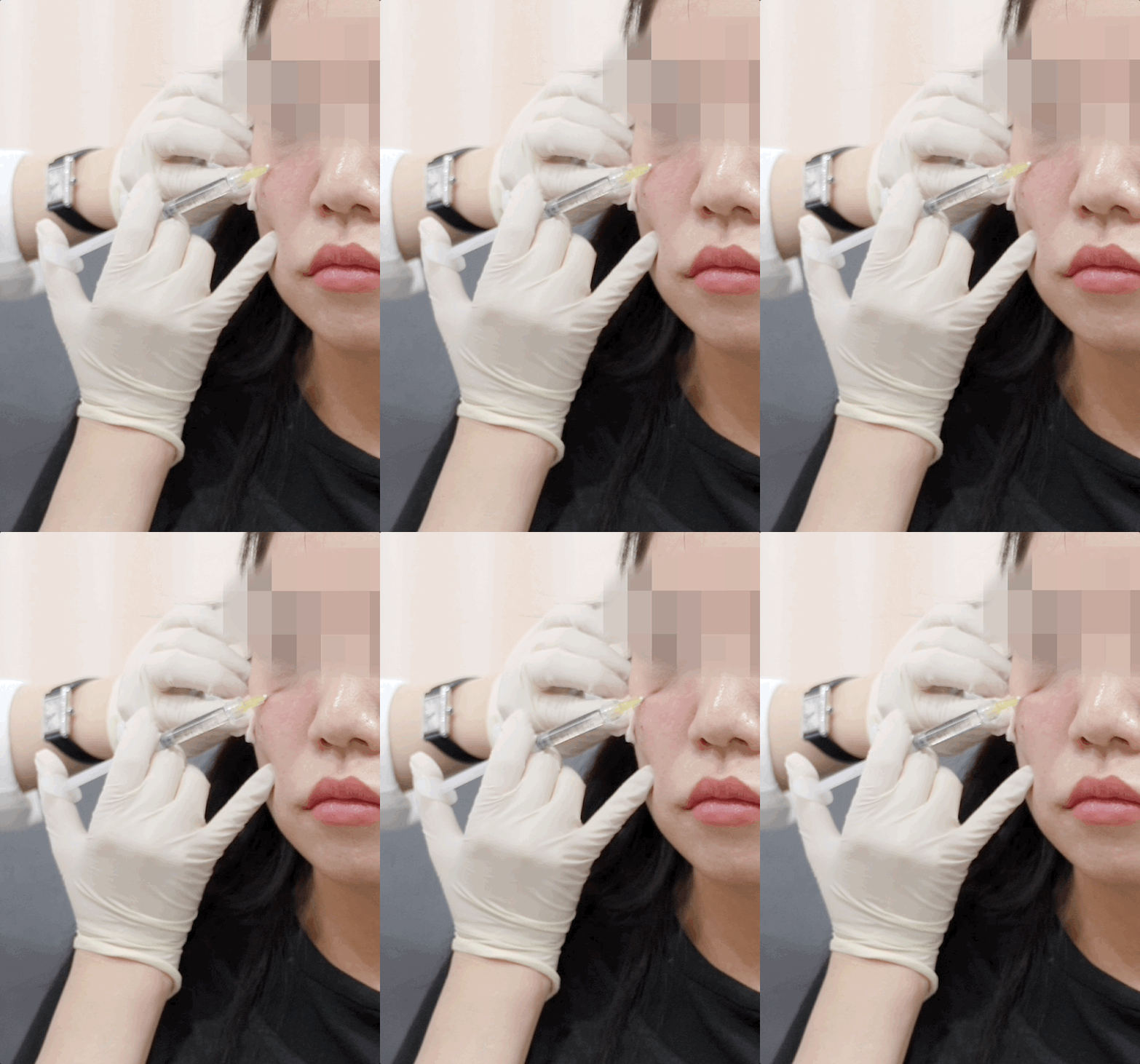
How Is Scar Filler Different?
When most people hear “filler,” they think of nose augmentation, filling smile lines, or adding facial volume.
Acne scar filler serves a different purpose.
The goal isn’t to add volume to the face. It’s to delicately support the area directly beneath a sunken scar, reducing the height difference between the scar and the surrounding skin.
For scars where there’s not enough tissue underneath, such as broad, gently sloping rolling scars or certain boxcar scars, the right amount of filler can act as a kind of scaffold.
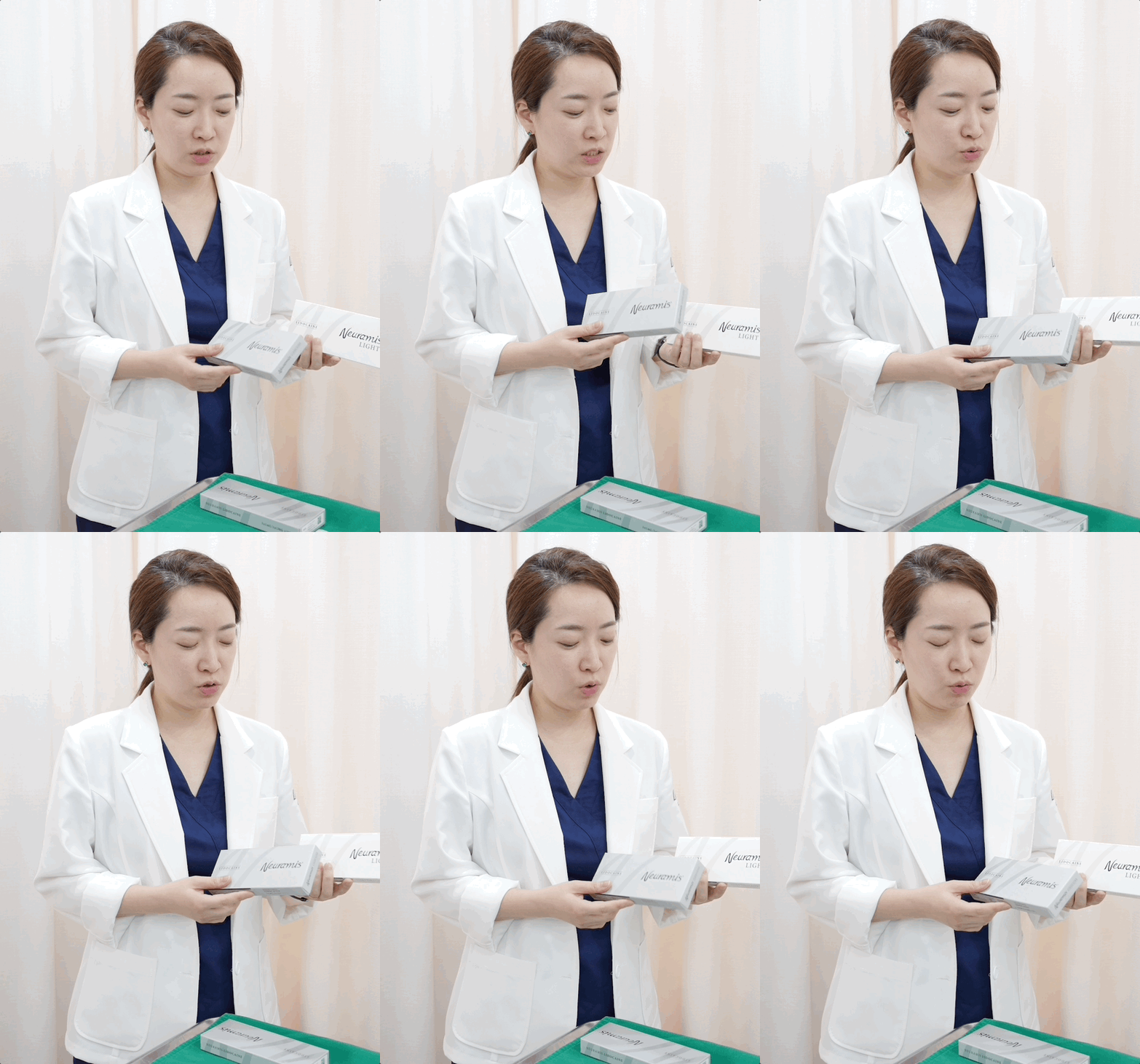
Hyaluronic acid filler is one established approach for treating depressed acne scars, used either on its own or alongside subcision, and the combination of subcision and filler has been studied in clinical research.
The key point, however, is that more is not better.
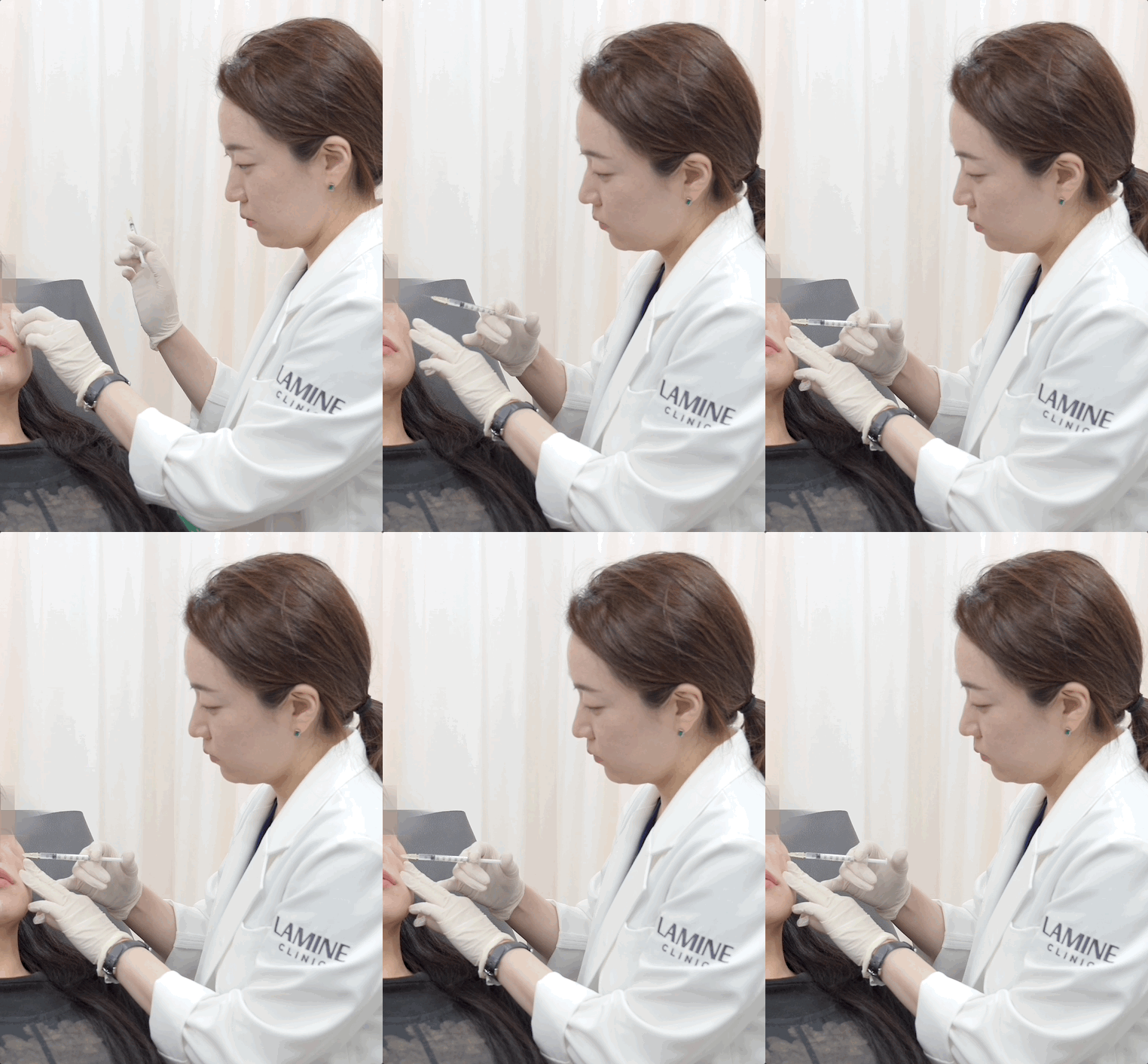
By filling only as much as each scar needs, based on its depth, width, skin thickness, and how the area moves, we can avoid an unnaturally puffy look and help the results blend seamlessly with your natural features.
A Natural Way to Restore Scarred Skin: Rejuran S
If scar filler physically supports the sunken space, the next step is to help the damaged skin around it recover in a healthier way. That’s where regeneration comes in.
One option we use for this is Rejuran S.
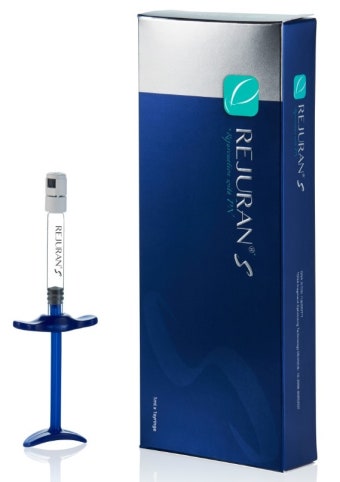
Rejuran S for Acne Scars
Rejuran S is part of the Rejuran line of PN (polynucleotide)-based tissue-repair biomaterials and is an approved product in Korea.
While standard Rejuran is generally used to improve overall skin texture and elasticity across the face, Rejuran S focuses on delivering concentrated PN directly into pitted acne scars, supporting dermal repair and collagen remodeling.
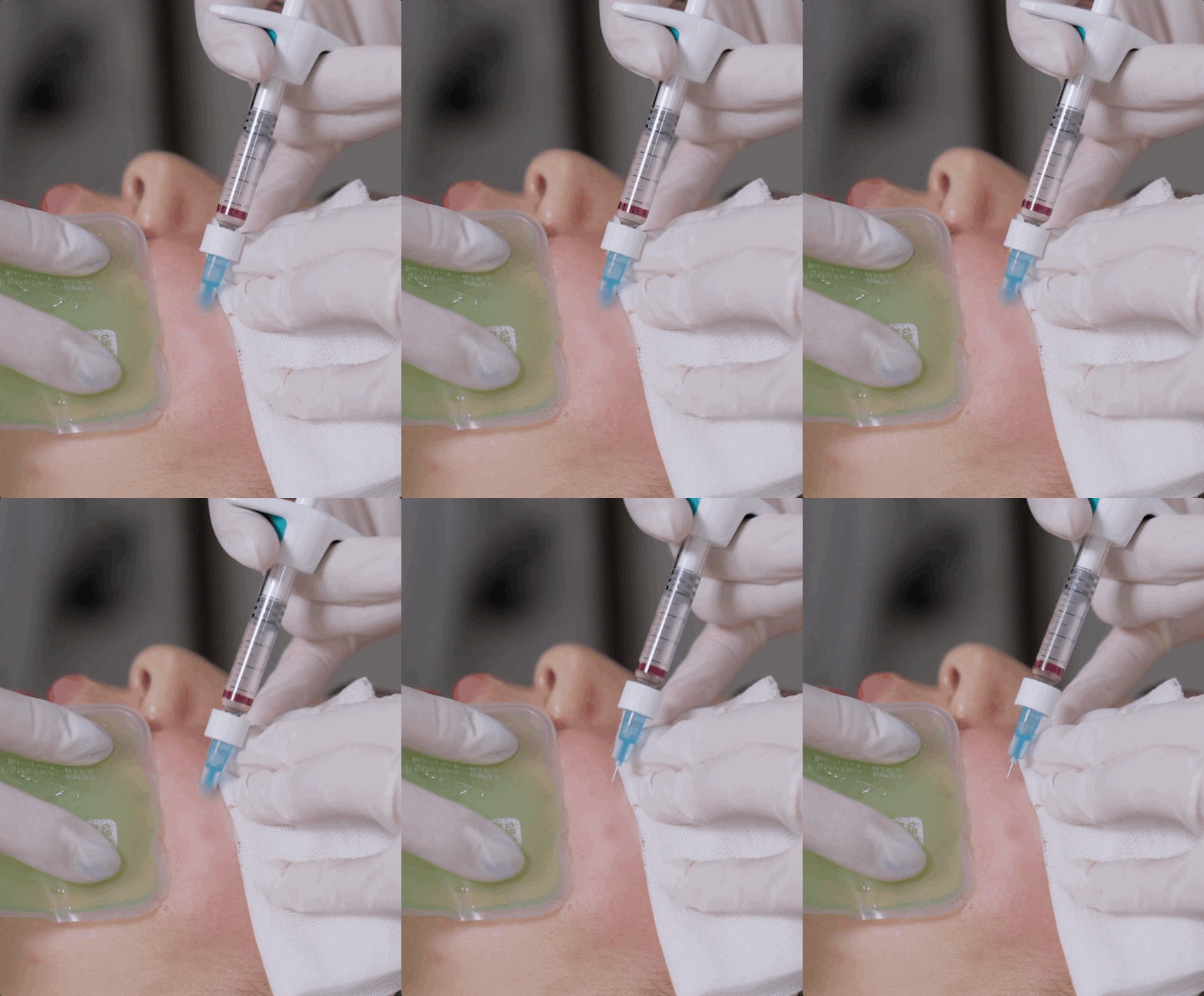
Its advantage is that it addresses the visible depression while also supporting regeneration beneath the surface.
Customized Treatment for Every Scar
We don’t recommend the same treatment for everyone, because acne scars can vary in shape even within the same face.
- If tethered tissue is pulling the scar down, subcision may first be needed to release it.
- Once released, filler may be used to support the space so it doesn’t sink again.
- If the surrounding skin is significantly damaged or needs regenerative support, Rejuran S can be applied locally.
“Had Multiple Laser Sessions with Little Change?”
If your pitted scars have stayed the same despite several laser treatments, it’s possible the treatment wasn’t matched to the underlying cause.
When the issue lies on the skin’s surface, treatments like Fraxel or microneedling RF can help. But when the tissue itself has sunk, rather than repeatedly stimulating the surface, it’s worth considering how to restore that lost space.
At LAMINE Clinic near Gwanghwamun, we examine each scar carefully, looking at:
- How deep the scar is
- Whether there is tethering underneath
- The thickness of the surrounding skin
- Whether volume is genuinely lacking
- Whether surface texture needs improvement
Based on this assessment, we select the right combination of treatments and tailor the sequence and intensity to your skin.
Have more questions about acne scar treatment?
Feel free to reach out anytime. Our team will be happy to help you find the right treatment for your skin.
Contact LAMINE Clinic
- Email: hello@lamine.co.kr
- WhatsApp:
- KakaoTalk:
- Instagram: @lamineskinclinic
Visit Us
LAMINE Clinic, 5th Floor, The Exchange Seoul Mall, 19 Mugyo-ro, Jung-gu, Seoul
Mon–Fri 11:00–20:00 | Sat 10:00–15:30 | Lunch break 13:30–14:30


댓글 남기기